
Securing an official certification, whether it is a state-level Women-Owned Business Enterprise (WBE) designation or a federal veteran-owned status, is a monumental milestone for diverse leaders. It signals that your organization is officially positioned to compete for high-level, institutional capital and life-changing government contracts.
But there is a silent bottleneck waiting on the other side of that achievement.
Winning the contract is only the first half of the equation. Keeping it requires surviving the compliance threshold.
Many growth-phase organizations mistakenly believe that the same operations that got them to seven figures will suffice for public sector execution. They won’t. When a government auditor or a $100M grant officer reviews your infrastructure, a standard business setup isn’t just an inefficiency; it is a legal and financial liability.
The Reality of “Contract-Ready” Infrastructure
In the commercial sector, minor operational friction can often be masked by sheer hustle. If a reporting deadline is tight, teams pull all-nighters to piece together manual data.
In government contracting, that approach fails instantly. Public funding demands a shift from a “working system” to a verifiable system.
When you cross into institutional execution, auditors look for distinct markers of structural integrity that standard frameworks lack:
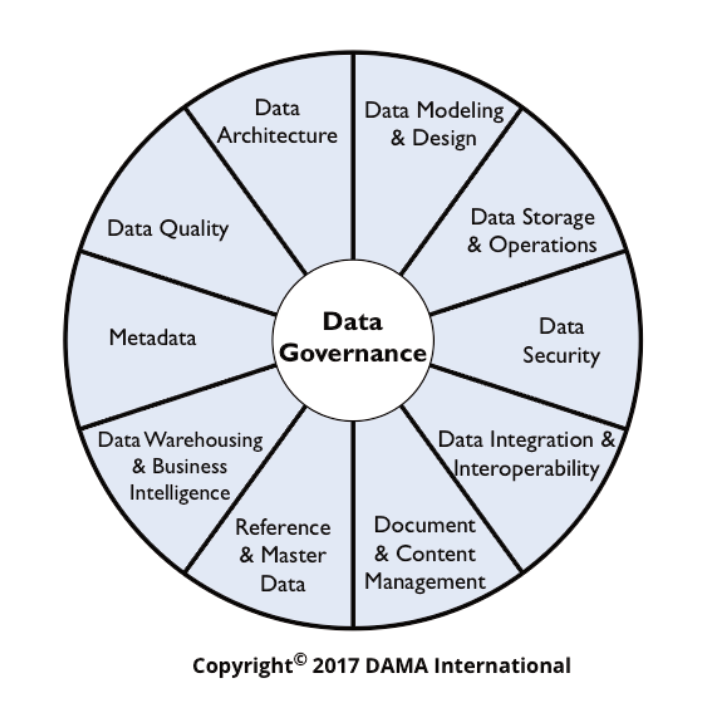
- Granular Data Governance: Can you track a single dollar of public funding through your entire operational lifecycle with absolute precision, or is it blended into a general fund?
- Audit-Ready Reporting: Is your compliance reporting an automated output of your daily workflow, or is it a reactive, manual fire drill that disrupts your entire executive team?
- A Single Source of Truth: If your project management logs, inventory systems, and accounting software live in disconnected spreadsheets, you do not have operational clarity. You have an audit vulnerability.
Moving from the “Idea Phase” to Institutional Governance
When an organization is in what we call the Idea Phase, its systems are dependent on people. The processes live inside the founder’s head or rely on specific team members keeping track of siloed data.
To successfully execute institutional contracts, you must transition to System-Institutionalized Governance.
This means your data infrastructure is completely independent of individual effort. It means your internal tracking is so tightly architected that an external audit becomes a seamless verification process rather than a crisis.
Operational excellence is the ultimate counter-narrative to systemic barriers. When your systems are tighter than your competitors’, your capability becomes undeniable, and your organization becomes completely audit-proof.
Audit Your Readiness Before They Do
The worst time to discover a gap in your data infrastructure is during a formal contract review. If your business systems are still built on disconnected frameworks, you are paying a heavy administrative tax in lost time, momentum, and potential revenue.
Before you submit your next high-stakes proposal or step into your next institutional audit, map your structural blind spots.
Recommended Reading for Leaders
- GAO Government Auditing Standards (The Yellow Book) by the U.S. Government Accountability Office (GAO)
- COSO Internal Control – Integrated Framework by the Committee of Sponsoring Organizations of the Treadway Commission (COSO)
🔗 Take our brief and free Operational Governance Scorecard today to evaluate your system’s readiness and ensure your infrastructure is built to protect your vision.
Have a specific challenge? Submit your request below for a tailored analysis, or suggest a governance topic for our next briefing.